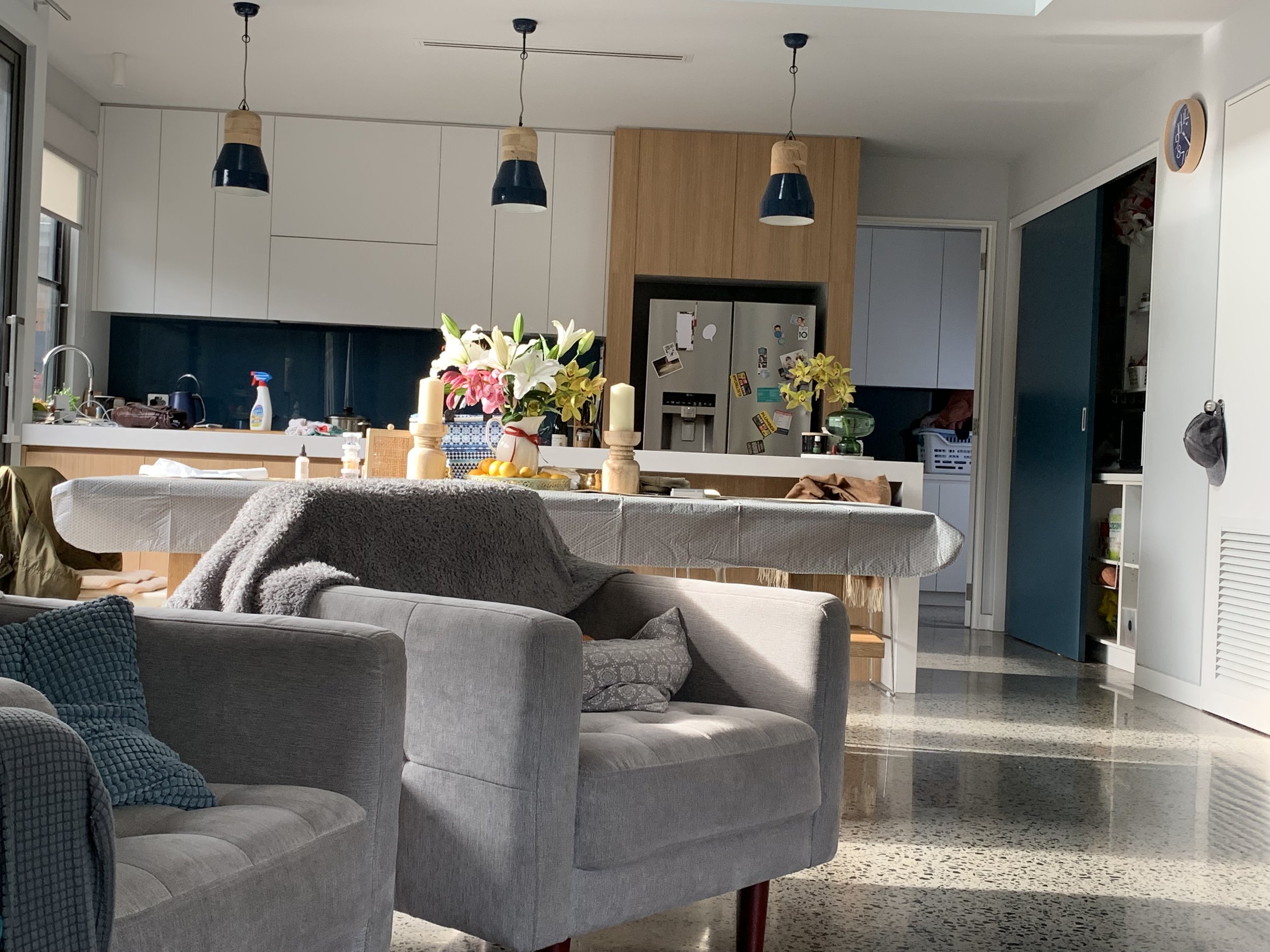
There’s a common misconception that sustainable design means compromise — that you’re trading aesthetics for efficiency, or paying a premium for something that only helps the planet in theory. In practice, the opposite is true. Well-designed sustainable homes are more comfortable, cheaper to run, and hold their value better than conventional builds.
For Melbourne homeowners planning a new build or a significant renovation, sustainability isn’t a bolt-on feature. It’s a design philosophy that shapes every decision from orientation to material selection — and when it’s done well, you barely notice it. You just notice that the house works.
Why Melbourne Is Uniquely Suited to Sustainable Design
Melbourne’s climate is one of the most interesting in Australia for residential architecture. Four distinct seasons, significant temperature swings within a single day, and a latitude that allows for effective passive solar design all year round.
This means a well-oriented home in Melbourne can capture winter sun to heat living spaces naturally while being shaded from harsh summer angles — without relying heavily on mechanical heating or cooling. The key is understanding the site, the orientation, and how the building envelope interacts with the local climate.
That’s not theory. It’s physics, applied with good design.
Passive Design: The Foundation of a Sustainable Home
Passive design is the single most impactful thing you can do for a home’s long-term performance. It refers to design strategies that work with the environment rather than against it:
• Orientation — positioning living areas to capture northern sun in winter while minimising western heat gain in summer
• Thermal mass — using materials like concrete or brick that absorb and slowly release heat, stabilising internal temperatures
• Insulation — high-performance wall, ceiling, and underfloor insulation that keeps conditioned air where it belongs
• Cross-ventilation — strategic window placement to encourage natural airflow, reducing the need for air conditioning
• Glazing — double or triple-glazed windows with appropriate solar coatings for each façade
These aren’t expensive add-ons. They’re design decisions made at the drawing board that have a compounding return for the life of the building. A well-designed passive home in Melbourne can achieve a NatHERS rating of 7 stars or above, significantly reducing energy consumption compared to the minimum standard.
Material Choices That Make a Real Difference
The materials you choose affect both embodied energy (the energy used to produce, transport, and install them) and operational performance.
Some practical choices worth discussing with your architect:
• Sustainably sourced or recycled timber for framing and finishes
• Low-VOC paints, adhesives, and sealants to improve indoor air quality
• Recycled steel or aluminium where steel framing is required
• Locally manufactured bricks, tiles, or stone to reduce transport emissions
• High-performance insulation products such as wool, cellulose, or rigid foam boards
• Rainwater harvesting systems integrated from the planning stage rather than retrofitted
The goal isn’t to chase every sustainability trend. It’s to make informed material selections that balance performance, budget, aesthetics, and environmental impact for your specific project.
Energy Systems: Beyond the Solar Panel
Solar panels are often the first thing people think about when they hear “sustainable home.” They’re important, but they’re most effective as part of a broader strategy.
A well-designed sustainable home integrates:
• Solar PV with battery storage, sized appropriately for actual energy use
• All-electric appliances (induction cooking, heat pump hot water, reverse-cycle heating) to eliminate gas dependency
• LED lighting with smart controls and daylighting strategies
• Energy monitoring systems so you can see where your energy goes and make informed adjustments
When the building envelope is performing well through passive design and good insulation, the energy systems don’t need to work as hard. That’s where the real cost savings live — not in the panels themselves, but in needing less energy in the first place.
Water and Landscape: The Overlooked Elements
Sustainability extends beyond the walls. Water-sensitive design and thoughtful landscaping contribute significantly to a home’s environmental performance:
• Rainwater tanks plumbed into toilets, laundry, and garden irrigation
• Permeable paving to reduce stormwater runoff
• Native and drought-tolerant planting to minimise irrigation needs
• Greywater recycling systems where local regulations permit
These elements work best when they’re designed in from the start, not bolted on as afterthoughts.
What This Means for Your Project
If you’re planning a new home or a major renovation in Melbourne, the conversation about sustainability should start in the first meeting with your architect — not at the end when you’re choosing fixtures.
The most effective sustainable homes are the ones where every design decision is considered holistically: how the building sits on the site, how air moves through it, how light enters it, what it’s built from, and how it will perform in 20 years, not just on the day you move in.
That’s the kind of design thinking that creates a home you genuinely enjoy living in — one that’s comfortable in every season, affordable to run, and built to last.
Ready to start a conversation about your project? Get in touch with Mark MacInnis Architect to discuss how sustainable design can work for your home.