
Extreme heat is no longer an edge case in Australia — it’s a design condition. Homes that rely solely on mechanical cooling struggle under prolonged heatwaves, rising energy costs, and grid pressure. The good news is that architecture already knows how to respond. Natural cooling isn’t a trend; it’s a set of proven, climate-responsive strategies that work quietly in the background, day after day.
Below are practical, design-led ways homeowners and renovators can create naturally cooler homes — without turning them into dark bunkers or gadget-heavy experiments.
Start with Orientation (It’s Free, and It Works)
Before materials, finishes or systems, orientation does the heavy lifting.
In southern Australia, the biggest heat enemy is low western sun. Bedrooms or living spaces facing west can absorb punishing afternoon heat that lingers well into the evening.
Practical design moves:
Prioritise north-facing living areas for controllable winter sun.
Push garages, laundries, stairwells or bathrooms to the west as thermal buffers.
Minimise west-facing glazing, or deeply protect it with shading.
Orientation decisions made early can reduce summer heat load dramatically — often before insulation or air-conditioning even enters the conversation.
Design for Cross-Ventilation, Not Just “Open Windows”
Natural cooling depends on air movement, not just openings.
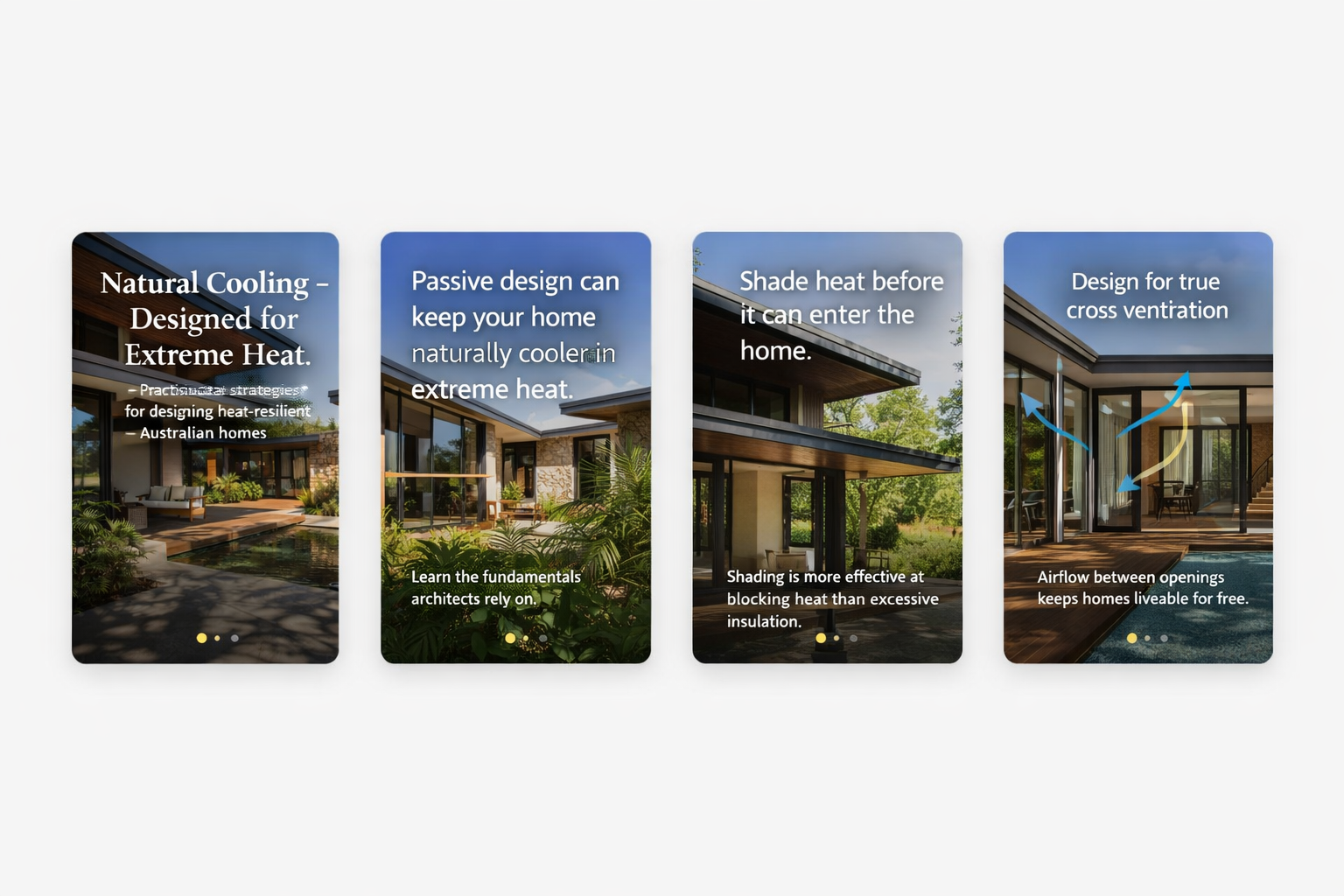
True cross-ventilation requires pressure differences: air must be able to enter, move through, and exit the home. Many houses technically have windows on opposite sides, but airflow paths are blocked by poor layout.
What works in practice:
Openings on at least two sides of a space, preferably offset.
Narrower floor plans that allow air to travel across rooms.
Internal doors, highlight windows, or vents that allow airflow even when privacy is needed.
Aligning openings with prevailing summer breezes, not just street frontage.
A well-ventilated home can feel 3–5°C cooler without touching a thermostat.
Use Shading as a First Line of Defence
Stopping heat before it enters the home is far more effective than trying to remove it later.
External shading is significantly more effective than internal blinds, especially during heatwaves.
High-performance shading strategies:
Fixed eaves sized specifically for your latitude.
Adjustable external screens or operable louvres.
Pergolas with deciduous planting for seasonal control.
Deep balconies or recessed windows on upper levels.
The goal is selective sun: welcome it in winter, block it in summer. Done well, shading becomes invisible performance.
Thermal Mass: Absorb Heat, Release It When It Matters
Thermal mass materials — concrete, brick, stone — can stabilise indoor temperatures, but only when used correctly.
They work by absorbing heat during the day and releasing it later, when temperatures drop. Without night purging, thermal mass can backfire and trap heat.
Best-practice use:
Place thermal mass inside the insulated envelope.
Pair it with night-time ventilation to flush out stored heat.
Avoid overusing dark, exposed mass in poorly ventilated homes.
Think of thermal mass as a battery: useful, but only if it can discharge.
Courtyards and Green Buffers Create Microclimates
Internal courtyards, planted voids, and green edges aren’t just aesthetic — they actively cool the air before it enters the home.
Vegetation cools through evapotranspiration, lowering surrounding air temperatures and improving comfort.
Design applications:
Central courtyards that draw air through living spaces.
Shaded garden edges on the western side of the home.
Green roofs or vertical planting where space allows.
A small, well-placed courtyard can outperform a much larger air-conditioning unit in perceived comfort.
Roofs and Ceilings Matter More Than Walls
In extreme heat, the roof is often the biggest source of heat gain.
Key considerations:
High-performance ceiling insulation (beyond minimum code).
Light-coloured or reflective roofing materials.
Ventilated roof cavities to release trapped heat.
Higher ceilings to allow hot air to stratify above living zones.
If your home feels hottest from above, the solution is usually architectural, not mechanical.
Design for the Climate You’re Getting, Not the One You Had
Heat-resilient homes are no longer a luxury — they’re future-proofing.
Good architects design homes that:
Stay comfortable during power outages.
Reduce reliance on active cooling.
Adapt to longer, hotter summers without constant upgrades.
Natural cooling strategies don’t remove the need for air-conditioning entirely — but they radically reduce how often and how hard it needs to work.
Thinking About a Renovation or New Build?
Designing for extreme heat is about smart decisions made early — orientation, layout, shading, and materials — not expensive add-ons later.
If you’re planning a renovation or new home and want it to perform naturally in Australia’s changing climate, speak with an architect who designs for real heat, not just compliance.
👉 Learn more or start a conversation at https://www.markmacinnis.com.au
A cooler home is usually the result of better thinking, not more machinery.