The modular home - built within eight minutes!

It is called the Ubox, and it can be expanded in eight minutes. Ten Fold Engineering, a UK-based company, has built an expandable-house prototype. The unit can be trucked to any location and set up in minutes.

When compressed, the building can be transported by truck. After you set it up in your preferred location, the building expands like an accordion, using a counterbalance system to grow roughly three times its original size. Ten Fold Engineering says its self-deploying building can also be used for medical clinics, stores, or office space. And it’s yours to unfold for about 130,000 pounds or around $500k AUS.

Here are some we found to find a similar modular builder in Australia.

PreBuilt

Anchor Homes - they have a great pdf - All you need to know about building a modular home.

Source: https://www.instagram.com/p/Cgajp0Iv10d/

Affordable Sustainable Housing Design that makes sense in 2022.

With the interest rates just rising and the cost of building at an all-time high, building cost-effectively and in a timely manner is more on the radar than ever before. Here are some key affordable sustainable designs that will assist you in planning and building your renovation or new home.

It is well known that the construction and environmental control of buildings contribute 40-50% of all greenhouse gas emissions. We all can assist in building efficiently with the following steps.

  1. Orientation of design - building to keep as much heat in during the cooler months and sun out in the hotter months can not only cut down on your heating and cooling costs but also ensure that your extension is more efficient with energy. e.g onto a sunny north-facing backyard. Our home is designed to be passively warmer in winter and cooler in summer. A key consideration was also the cost of the home to run not just build.

    Before the days of electricity and gas, houses were warmed, cooled and lit by the sun, air and wind. Orientation of a house can take advantage of the sun for natural light and warmth (unless you’re in a tropical climate, where your focus will be on shading). Eaves and awnings can provide sun control; openings such as windows and doors can allow for natural ventilation and cooling; and materials with thermal mass, such as stone and rammed earth, can store heat within. These passive solar design principles improve the performance, energy efficiency and sustainability of a home.

Murrumbeena Home - Mark MacInnis Architect

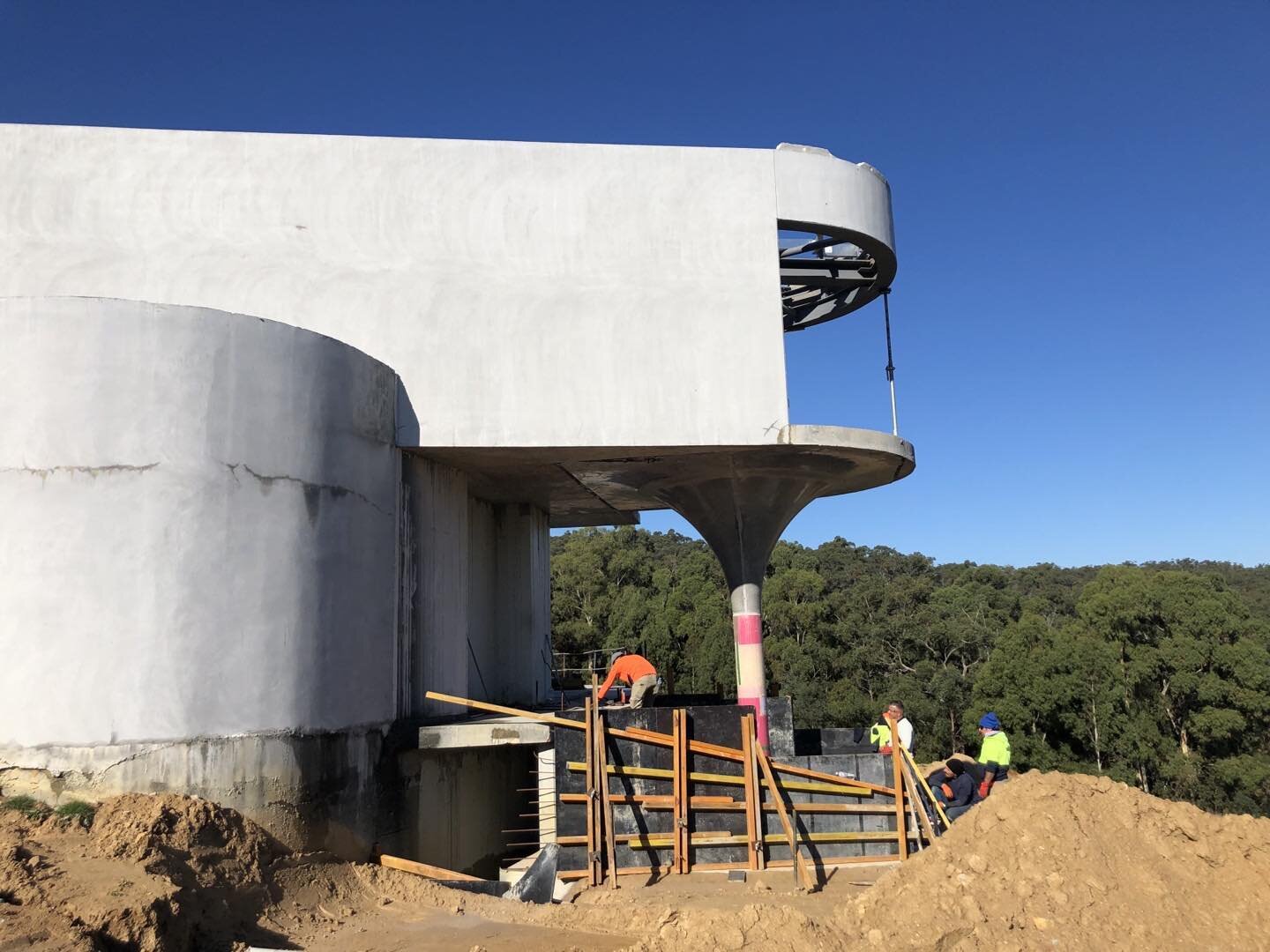
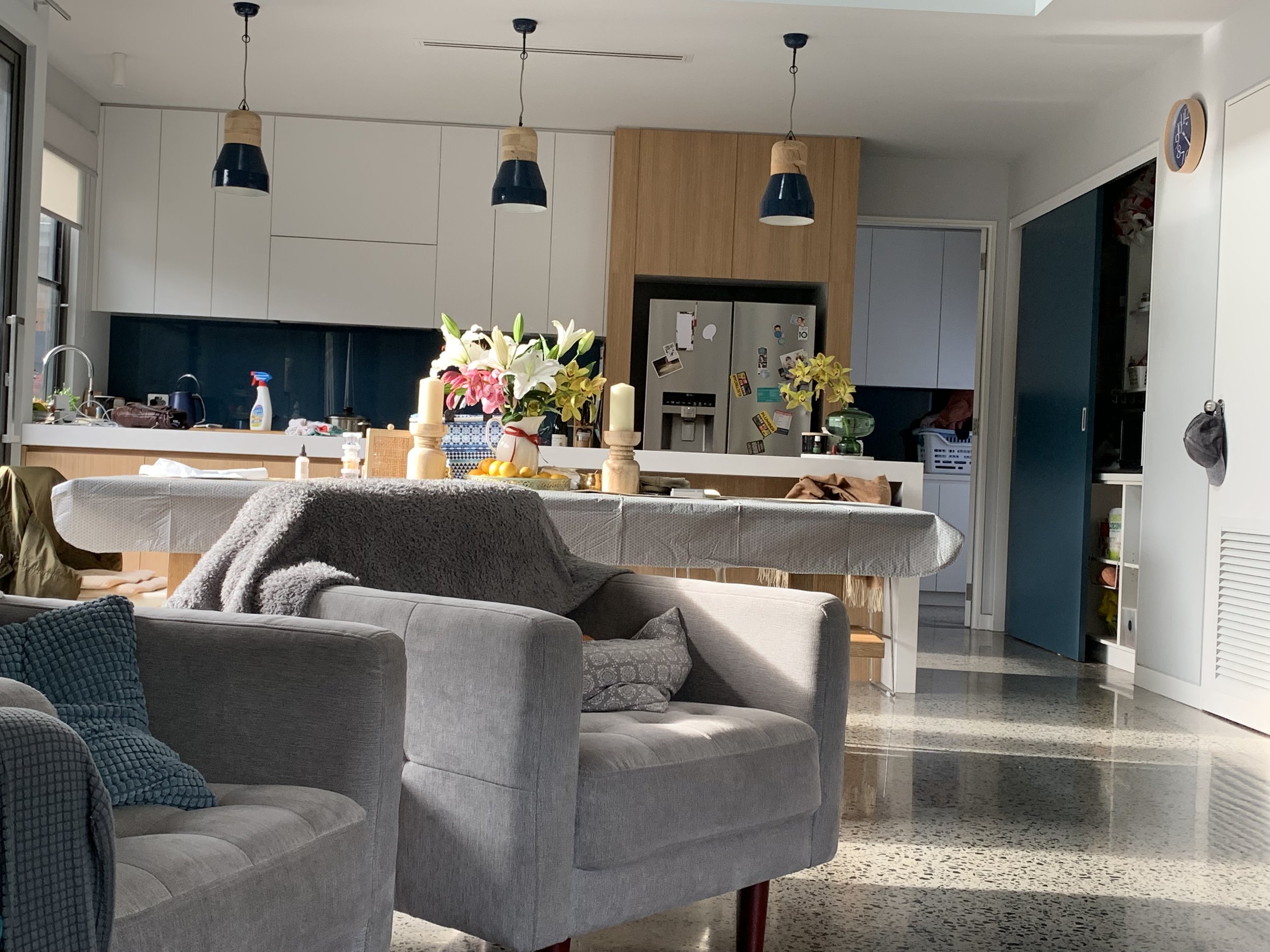
Our living area. It is west facing but captures the light and heats up the floor in winter. We also have double glazing. While concrete is often not the most environmentally friendly product to make, being very carbon-intensive, it does have a number of benefits. Concrete is a great example of thermal mass, helping to store thermal energy, and it’s very hard-wearing, so it requires very little maintenance and has a very long lifespan.

2. The verandah - a verandah is a great way of shading an area, and protecting it from the elements. We use it in part to escape the heat but also to provide a sheltered sitting area.

3. Use local materials where you can. With the short supply of materials in the building industry at the moment, those who have chosen locally sourced materials will be in front. Using local resources is typically a more sustainable option as they are native to the region, sometimes renewable, and reduce the energy that is required to transport goods long distances. If you’re designing or renovating a house, consider what materials are native to your region to create a house that is not only more sustainable, but also more in harmony with the local landscape. Sandstone has been a building block of Australian architecture for more than two centuries, its strength and durability outlasting many other construction materials. Rammed earth is easily accessible and is naturally cool living environments provide a reprieve from the extreme temperatures of the hotter regions.

Rammed earth construction - Mark MacInnis Architecture

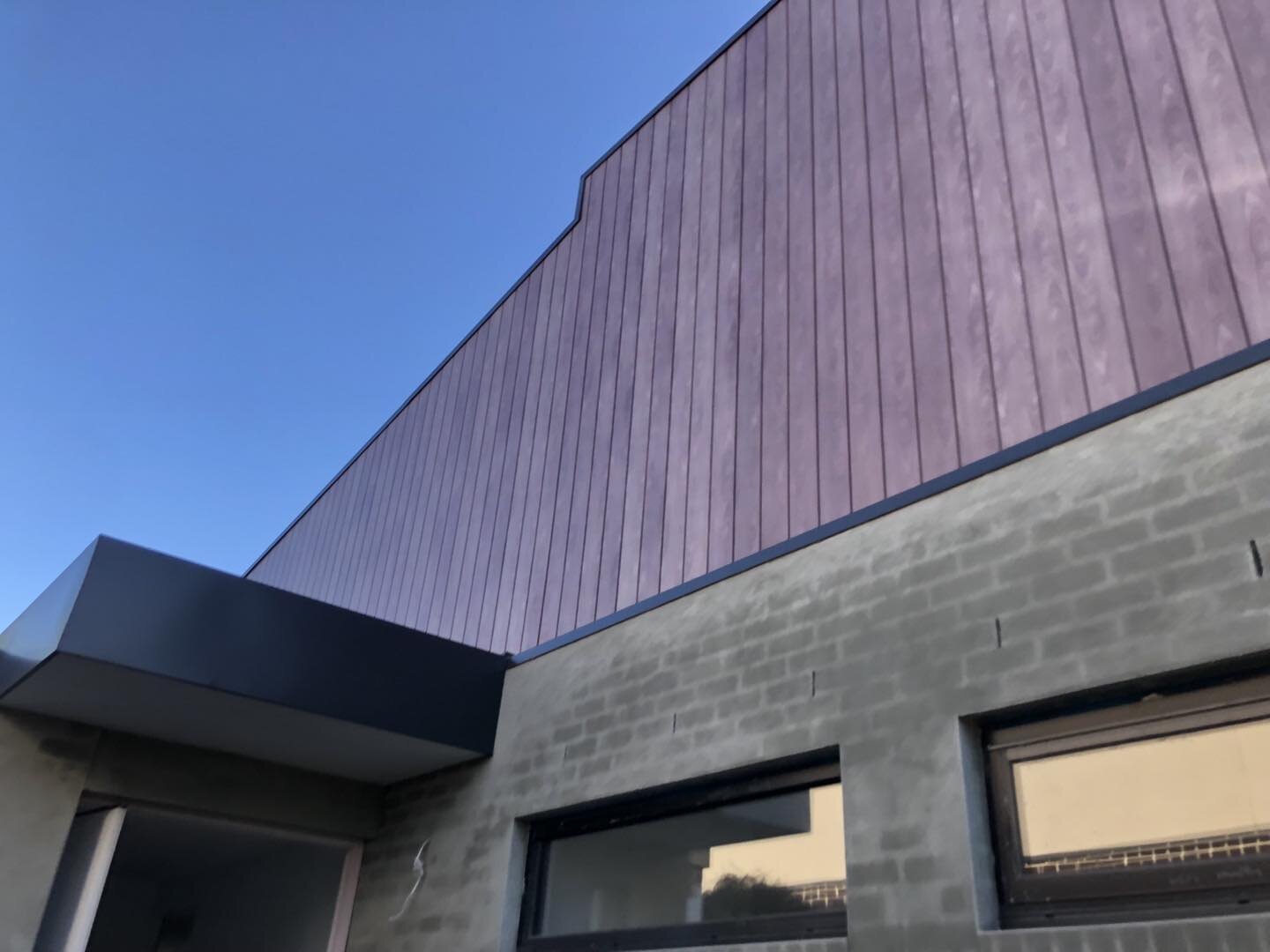
Rammed earth project under construction

4. Plant a tree or two. Planting trees and gardens not only enriches your environment but can add to shade, atmosphere ad even your table with fresh herbs and veggies. Sometimes you need to remove trees or gardens to create a design but plantings are very important and give so much back to the habitat. We have a circle of trust that we often have our breakfast in and give us a lovely outlook from our living area. We also have a water bladder under our deck to capture rain run off and grey water from our washing machine to water our veggie patch.

The circle of Trust garden - Mark MacInnis Architect

The circle of trust garden area.

5. Lamps and skylights instead of main lights. We use lamps where we can instead of moonlights. Not only does it set a better mood but it also is far more energy-efficient. Even on a cloudy day our sky lights in the hall and.

skylight in hallway - Mark MacInnis Architect

Hallway skylights. Also has automatic blinds which we can close to shut out the hot sun.

6. Find local trades. Working with trades in your local area will assist you with so many elements of your build. We also try and find local suppliers and trades for each job we do to keep the money in the community and because they generally understand what works with the council and how to build efficiently.

Hampton a family renovation

I thought I would profile the Hampton lookbook on this blog. This home was done several years ago now and just sold for well over $3.4 million dollars.

Working with the own owners on this project was really rewarding. This was a family home in Hampton that needed a big face lift and extension. The clients were very open to my ideas and together we created a beautiful family home that they have enjoyed for many years.

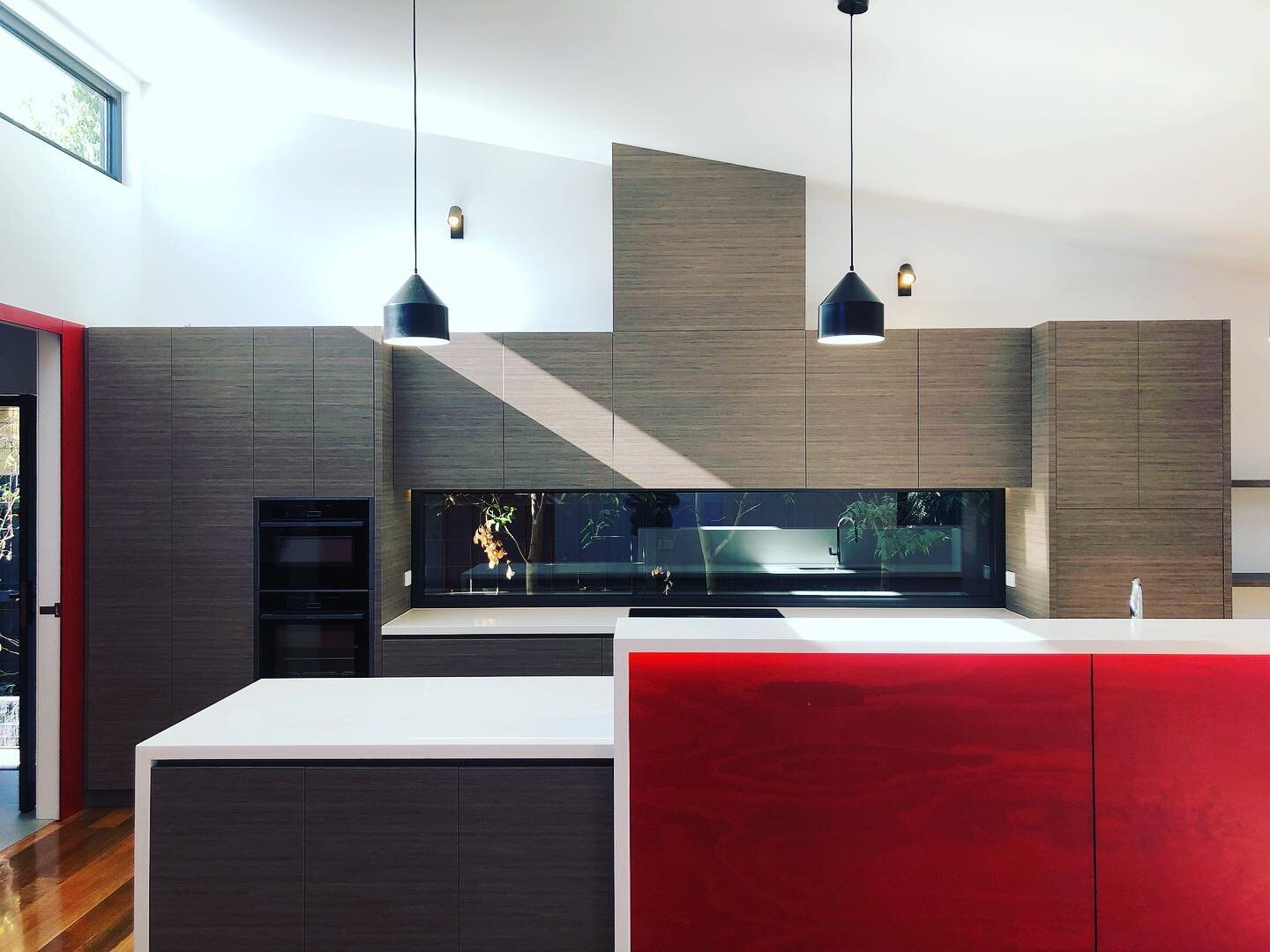
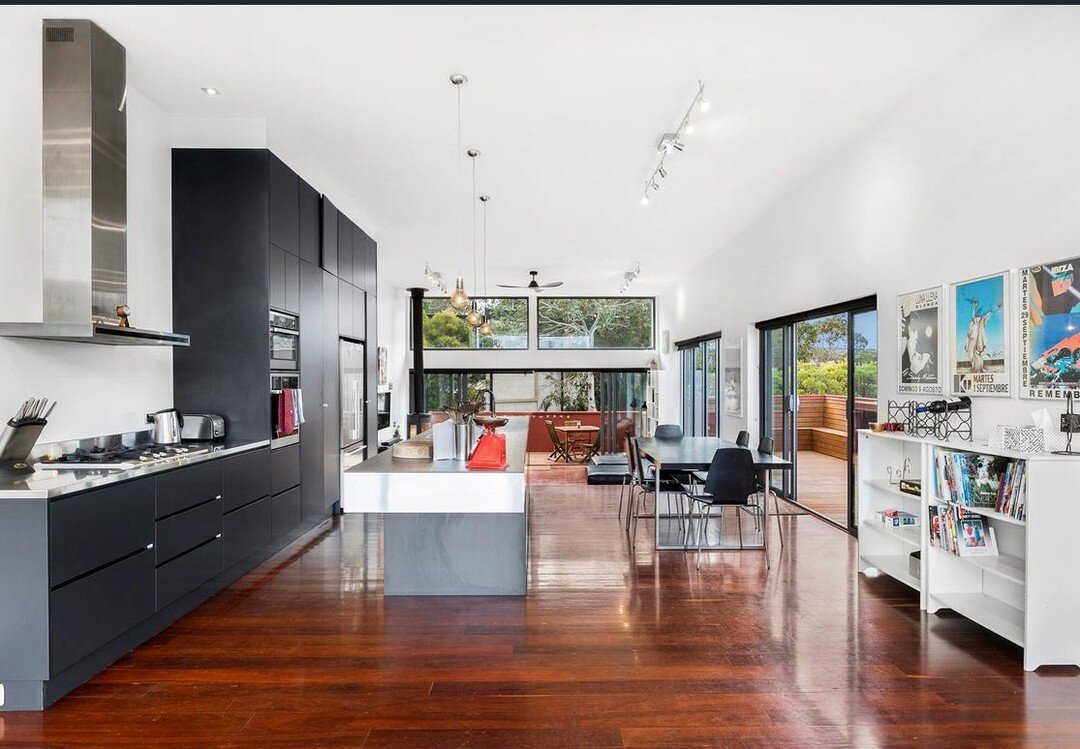
Modern Kitchen. It had it’s own seperate butters pantry.

Here is the recent advertisement for the home in Real Estate.com.au

Design for Hampton Home

Green living walls

Bringing the outside in has been a feature of the Australian housing market for some time. We like to be surrounding by nature and our climate means that we can have big open spaces that face our open spaces like our gardens. However now I have noticed the trend to make living green walls part of the architecture of the home. Living green walls have become a feature that many home lovers are getting on board with.

What use to be confined to a commercial use in foyers and window dressings are now making their way into our homes.They’ve recently become some of the most striking and important eco-friendly features in buildings across the world.

When vertical gardens are used on the interiors of buildings, they can help improve air quality not only because plants naturally remove carbon dioxide and produce oxygen-rich air, but also because plants can filter the air around them by absorbing and cleaning pollutants. When they’re used inside, living green walls frequently act as a three-dimensional, living piece of artwork, providing an aesthetic component as well as a health element.

Where there isn’t the inclination to look after a living green wall some have opted for a mural or wallpaper which gives the illusion of a green space as a backdrop to a room.

My wife is a big advocate of garden and green spaces and so I am encouraged to think more about green spaces when designing homes, especially in tight spaces where a touch of green can really make the space come to life.

What is your design style?

When designing a new home or renovation, the clients that I work with are forced for the first time to really narrow down their design preferences. I have developed this simple quiz that might just assist you to determine your style preferences when designing your dream home.

So what is your design style? Are you a Minimalist, Hoho, Hamptons, Farm-house, Scandi or other?

Take the quiz and find out.


Don't put your design dreams on hold. Seize the day!

If anything this pandemic has taught us is that the future is uncertain and we need to embrace life. Living in close quarters with other members of your family and spending more time at home now, this is the perfect time to revisit how you want to live. It is a great time to collect your design thoughts for your home revamp.

Is your dining table a makeshift office, classroom and craft room?

Is your dining table a makeshift office, classroom and craft room?


Here are 5 ideas to start your Design Dream of a Renovation Project.

  1. Create a scrapbook/lookbook - these days collecting your ideas can be done on Pinterest, Houzz or another app. Having an area where you keep images you like can be a great starting place to refine what your style and design bent is.

By visualising your ideas you can start to see a new future

By visualising your ideas you can start to see a new future

2. Decide on the amenity you need. As we face lockdowns and a new environment the home has taken on new functions. Deciding how you use your renovation space is an important step. While as an architect I can assist you with how the home functions and looks, you need to scope out what you really need. Understanding that is best done by creating a list of needs and rooms. This should take into account your family lifecycle and plan for the next 10-15 years. Will your kids still be living with you? Do you need to plan for the care of your parents? Are you likely to be working from home more in the future?

3. Get your original plans. Having your original plans from your local council is a great first step. It will assist you in knowing where the walls and boundaries of your property are and if there are any issues with the building envelope.

Ask your local council for your house plans

Ask your local council for your house plans

4. Inspiration is everywhere. Now is the time when we have more time at home to look for those little ideas that can change the way you live and make it easier. Looking on Instagram, Pinterest and housing magazines can create some new ideas and inspiration.

Know your style and aesthetic

Know your style and aesthetic

5. Set a realistic time frame and budget

Most renovation timeframes are over a year. The permits and approvals can take 6 months depending on your council and plans. It is good to have a realistic timeframe so you can plan your life and key events around the renovation. Setting a budget is more difficult and you may need to scope your project first and then get a quantity surveyor to price it.

So as you can see there is a lot you can start to do to plan your renovation. Use your time wisely and start the process today.

How we are dealing with Corona virus and renovating

While Australia is well placed to fight the COVID virus it has changed the way we work and live.

The survey, of more of 2,200 Australian homeowners using Houzz, found that nearly two-thirds of homeowners (62 percent) – who were in the midst of a home renovation or design project when the coronavirus pandemic was declared on March 11, 2020 – were able to continue with their renovations. Only two percent cancelled their ongoing project. 

I have found that most clients are keen to continue with their plans and being at home more has created a sense of urgency.

Image source: unsplash ionut-vlad

Image source: unsplash ionut-vlad

As we have moved to working from home, the need for the balance between open plan and seperate working spaces is more important. While some families may have opted in the past for a fully open living, dining and kitchen area, now some are opting for that seperate study area as a priority.

Image source: Unsplash tran-mau-tri-tam

Image source: Unsplash tran-mau-tri-tam

Others are wanting that space for their extended family with a kitchenette and seepage bed and lounge area so they can take care of their parents or even have a space to isolate.

Whatever your priority, one thing for sure, COIVD has placed more importance as our home as a multifunctional space that can be a retreat and sanctuary but also a rear that we can be productive in for work.